

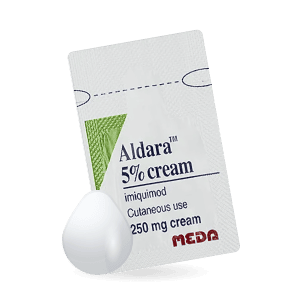
Aldara Cream


Aldara Cream is a topical medication designed for specific skin conditions. This over the counter (OTC) treatment is conveniently available without a prescription. It works by stimulating the body’s immune system to fight certain growths. Aldara Cream is commonly used for external genital and perianal warts, as well as some forms of superficial basal cell carcinoma and actinic keratosis. Experience the benefits of this effective skin solution.
Extra 10% discount with coupon: EXTRA10
Each dosage option has its own packaging options.
Understanding Aldara Cream Topical Treatment for Various Dermatological Concerns
Welcome to a detailed guide on Aldara Cream, a renowned topical treatment designed to address specific skin conditions. This comprehensive resource is crafted to provide you with essential information about how Aldara Cream works, its approved uses, and what you can expect during the course of treatment. Understanding your options for managing various dermatological concerns is crucial, and we aim to deliver clarity and valuable insights into this important medication.
Aldara Cream is more than just a topical application; it represents an innovative approach to skin health, harnessing the body’s own immune system to combat certain types of skin lesions. For individuals in the United States and beyond seeking effective solutions for actinic keratosis, external genital warts, and superficial basal cell carcinoma, Aldara Cream offers a targeted and well-established treatment pathway. Delve deeper into its mechanisms, benefits, and typical applications to empower your health decisions.
Understanding Aldara Cream and its Mechanism of Action
Aldara Cream is a prescription-strength topical medication recognized for its unique ability to modulate the immune system. Its active ingredient, Imiquimod, is an immune response modifier, meaning it works by stimulating the body’s natural defense mechanisms. Unlike traditional creams that might directly attack abnormal cells or viruses, Imiquimod encourages your own immune cells to produce interferons and other cytokines. These proteins are crucial for fighting off viruses and destroying abnormal cells that can lead to certain skin conditions.
When Aldara Cream is applied to the skin, Imiquimod penetrates the affected area and activates immune cells present in the epidermis and dermis. This local activation leads to an increase in immune system activity in the treated region, helping the body to recognize and eliminate target cells. This indirect action is what makes Aldara Cream particularly effective for conditions rooted in cellular abnormalities or viral presence.
The formulation of Aldara Cream typically contains 5% Imiquimod, delivered in convenient, single-use sachets or a multi-dose tube, ensuring precise dosing and minimizing contamination. Its targeted action means that while it is working to resolve the specific skin condition, it is also engaging your immune system in a localized, controlled manner.
Approved Indications for Aldara Cream
Aldara Cream has received approval for treating three distinct skin conditions:
- Actinic Keratosis (AK) on the Face or Scalp: Actinic keratosis, also known as solar keratosis, refers to rough, scaly patches on the skin that develop from years of sun exposure. These lesions are considered pre-cancerous and, if left untreated, have the potential to progress into squamous cell carcinoma, a type of skin cancer. Aldara Cream is used to treat clinically typical, nonhyperkeratotic, nonhypertrophic actinic keratoses on the face or scalp in adults with a healthy immune system. Its mechanism helps the immune system to identify and eliminate these abnormal skin cells before they can develop into more serious conditions. Treatment often involves several cycles of application, allowing the immune response to effectively clear the lesions.
- External Genital Warts (EGW): External genital warts are benign growths caused by the human papillomavirus (HPV). They can appear on the skin around the genitals and anus. Aldara Cream is indicated for the treatment of external genital and perianal warts in individuals 12 years of age and older. By stimulating the immune system locally, Imiquimod helps the body fight off the HPV virus, leading to the clearance of the warts. It’s important to understand that while Aldara Cream can effectively remove visible warts, it does not cure the underlying HPV infection, meaning new warts may develop over time. Consistent application as directed is key to achieving optimal results in clearing existing lesions.
- Superficial Basal Cell Carcinoma (sBCC) in Adults: Basal cell carcinoma (BCC) is the most common form of skin cancer. Superficial basal cell carcinoma is a specific type of BCC that primarily affects the outermost layer of the skin. Aldara Cream is approved for the treatment of biopsy-confirmed superficial basal cell carcinoma in adults with a normal immune system, when surgical methods are considered less appropriate. For sBCC, Imiquimod stimulates the immune system to recognize and destroy the cancerous cells. This targeted immune response offers a non-surgical option for specific types of skin cancer, providing an alternative for certain patients. The treatment course for sBCC typically involves several weeks of application, carefully monitored to ensure clearance of the cancerous cells.
How Aldara Cream Works: A Deeper Dive into Imiquimod
The therapeutic action of Aldara Cream stems entirely from its active ingredient, Imiquimod. Imiquimod is classified as a Toll-like Receptor 7 (TLR7) agonist. Toll-like receptors are a class of proteins that play a key role in the innate immune system, recognizing molecules characteristic of pathogens or damaged cells. When Imiquimod binds to TLR7 on immune cells (such as macrophages, dendritic cells, and monocytes) present in the skin, it triggers a cascade of immune responses.
This activation primarily leads to the production and release of cytokines, which are signaling proteins essential for cell communication and immune regulation. Key cytokines induced by Imiquimod include:
- Interferon-alpha (IFN-α): A potent antiviral and anti-tumor cytokine that directly inhibits viral replication and tumor growth, and modulates immune responses.
- Tumor Necrosis Factor-alpha (TNF-α): A cytokine involved in systemic inflammation and the destruction of tumor cells.
- Interleukin-6 (IL-6) and Interleukin-8 (IL-8): Cytokines that promote inflammation and attract other immune cells to the site of application, further enhancing the immune response against the target cells or viruses.
By locally increasing the concentration of these immune modulators, Aldara Cream effectively marshals the body’s own defenses to target and eliminate abnormal cells (in AK and sBCC) or virus-infected cells (in EGW). This direct stimulation of the innate immune system, followed by engagement of adaptive immunity, provides a powerful and specific mechanism for clearing these dermatological conditions. The localized nature of the immune response minimizes systemic side effects, focusing the therapeutic action precisely where it is needed.
Key Features and Benefits of Aldara Cream
Aldara Cream offers several compelling advantages as a treatment option for its approved indications:
- Immune-Mediated Action: Unlike destructive methods (e.g., cryotherapy, excision) or anti-proliferative agents, Aldara Cream works by stimulating the body’s natural immune response. This approach allows the body to clear the affected cells naturally.
- Non-Invasive Treatment: As a topical cream, it offers a non-surgical alternative for managing actinic keratosis, external genital warts, and superficial basal cell carcinoma, potentially reducing scarring and recovery time associated with invasive procedures.
- Targeted Efficacy: The localized immune response targets specific abnormal cells or viral infections, while generally sparing healthy surrounding tissue.
- Convenient Home Application: Once proper usage instructions are understood, patients can apply Aldara Cream in the comfort of their home, integrating it into their daily routine.
- Potential for Cosmetic Outcomes: Because it works with the body’s immune system to clear lesions, Aldara Cream can often lead to favorable cosmetic results, with treated areas blending well with surrounding skin once healing is complete.
- Established Efficacy: With extensive clinical research and real-world experience, Aldara Cream has a well-documented track record of effectiveness for its approved conditions.
Product Characteristics Table for Aldara Cream
Below is a quick reference table summarizing the key characteristics of Aldara Cream.
| Characteristic | Description |
|---|---|
| Product Name | Aldara Cream |
| Active Ingredient | Imiquimod |
| Strength | 5% |
| Formulation | Topical Cream |
| Primary Uses | Actinic Keratosis (on face/scalp), External Genital Warts, Superficial Basal Cell Carcinoma |
| Mechanism of Action | Immune Response Modifier (TLR7 Agonist) |
| Typical Packaging | Single-use sachets or multi-dose tubes |
Comparison with Popular Analogs
To further understand the position of Aldara Cream in the landscape of dermatological treatments, it’s helpful to compare it with other popular options. While many treatments exist, here we focus on some common analogs for similar conditions.
| Product Name | Active Ingredient | Strength | Primary Indications | Mechanism | Key Differences / Considerations |
|---|---|---|---|---|---|
| Aldara Cream | Imiquimod | 5% | Actinic Keratosis, External Genital Warts, Superficial Basal Cell Carcinoma | Immune Response Modifier (TLR7 Agonist), stimulates interferon production | Broadest range of approved indications for Imiquimod. Established regimen often involves fewer applications per week than Zyclara for AK. |
| Zyclara Cream | Imiquimod | 3.75% | Actinic Keratosis (full face or balding scalp), External Genital Warts | Immune Response Modifier (TLR7 Agonist), stimulates interferon production | Lower concentration of Imiquimod (3.75%). Approved for full-face or balding scalp AK treatment, often with a daily application regimen for a shorter duration compared to Aldara Cream‘s AK regimen. Not indicated for sBCC. |
| Efudex Cream / Fluoroplex Cream | Fluorouracil | 0.5% to 5% | Actinic Keratosis, Superficial Basal Cell Carcinoma | Antimetabolite, inhibits DNA/RNA synthesis in rapidly dividing cells | Directly toxic to rapidly growing abnormal cells. Often results in more intense inflammatory reaction. Not indicated for external genital warts. Can be effective for large fields of sun damage. |
| Picato Gel | Ingenol Mebutate | 0.015% or 0.05% | Actinic Keratosis | Induces rapid cell death and a localized inflammatory response | Very short treatment course (2-3 days). High rates of local skin reactions. Only approved for AK. Different strengths for face/scalp vs. trunk/extremities. |
| Podofilox Solution / Gel | Podofilox | 0.5% | External Genital Warts | Antimitotic agent, arrests cell division | Directly cytotoxic to wart tissue. Self-applied at home for a few days a week. Not immune-mediated. Only for EGW. |
This comparison highlights that while other treatments exist, Aldara Cream stands out due to its immune-modulating mechanism and its broad utility across actinic keratosis, external genital warts, and superficial basal cell carcinoma. The choice of treatment often depends on the specific condition, location, patient preference, and other factors.
Important Considerations During Treatment with Aldara Cream
When using Aldara Cream, it’s important to be aware of what to expect during the treatment course. Because Imiquimod stimulates an immune response, local skin reactions are common and are often a sign that the treatment is working effectively. These reactions can include:
- Redness (Erythema): The treated area may become noticeably red.
- Swelling (Edema): Mild to moderate swelling can occur.
- Itching (Pruritus): Itching sensations are frequently reported.
- Burning or Stinging: Some individuals may experience a burning or stinging sensation.
- Flaking, Scaling, or Crusting: The skin may develop a dry, flaky, or crusty appearance as cells are shed.
- Scabbing or Erosions: In some cases, the skin may scab over or develop small open sores.
These reactions typically peak during the later weeks of treatment and usually resolve within a few weeks after treatment is completed. It’s important to understand that these are often normal and expected responses indicating that the cream is actively engaging your immune system. If these reactions become particularly bothersome, temporary breaks from treatment may be advised, or the frequency of application might be adjusted.
Other important considerations:
- Sun Protection: Treated areas may become more sensitive to sunlight. It is crucial to use adequate sun protection, such as sunscreen and protective clothing, while undergoing treatment and during the healing process.
- Avoidance of Certain Areas: Aldara Cream is intended for external use only. Care should be taken to avoid contact with eyes, nostrils, mouth, or other mucous membranes.
- Hygiene: Always wash hands thoroughly before and after applying the cream.
- Complete the Course: For optimal results, it is generally important to complete the full recommended course of treatment, even if the lesions appear to have cleared sooner. Stopping treatment prematurely may lead to recurrence.
Storage Information
To maintain the efficacy and stability of Aldara Cream, proper storage is essential. Store Aldara Cream at room temperature, typically between 2°C to 30°C (36°F to 86°F). Protect the cream from excessive heat and freezing. Keep all medications out of reach of children and pets. If the cream is provided in single-use sachets, each sachet should be used entirely once opened, and any remaining cream should be discarded.
Frequently Asked Questions About Aldara Cream
Here are some of the most popular questions about Aldara Cream, along with informative answers to help you understand this treatment better.
-
What is the typical duration of treatment with Aldara Cream?
The duration of treatment with Aldara Cream varies depending on the condition being treated. For actinic keratosis, treatment typically lasts for 16 weeks, with applications usually 2 times per week. For external genital warts, treatment often continues until the warts clear, up to a maximum of 16 weeks, with applications 3 times per week. For superficial basal cell carcinoma, treatment generally involves applications 5 times per week for 6 weeks. It is important to adhere to the specific regimen for your condition to achieve the best results.
-
What should I expect the skin to look like during treatment?
During treatment with Aldara Cream, it is very common for the treated skin to show signs of an immune response. This can include redness, swelling, flaking, scabbing, and itching. These reactions are often a positive sign that the cream is working to eliminate abnormal cells or fight the virus. The intensity of these reactions can vary among individuals. The skin generally returns to its normal appearance a few weeks after the treatment course is completed.
-
Can I use Aldara Cream on other parts of my body or for other skin conditions?
Aldara Cream is approved for specific conditions: actinic keratosis on the face and scalp, external genital warts, and superficial basal cell carcinoma in adults. It should only be used on the body parts and for the conditions for which it has been approved and as instructed. Using it for other conditions or on other areas of the body may not be effective and is not advised.
-
What if I miss a dose of Aldara Cream?
If you miss an application of Aldara Cream, simply apply the next dose at its regularly scheduled time. Do not apply extra cream to make up for a missed dose. Maintaining a consistent application schedule as much as possible is important for the effectiveness of the treatment.
-
How long does it take to see results with Aldara Cream?
The time to see noticeable results with Aldara Cream can vary depending on the condition and individual response. For external genital warts, some improvement may be seen within a few weeks, but complete clearance can take several weeks or the full 16-week course. For actinic keratosis and superficial basal cell carcinoma, the full effects and clearance are typically assessed after the entire treatment course is completed and the local skin reactions have resolved, which can be several weeks post-treatment. Patience and adherence to the regimen are key.
-
Is it normal for the skin to become irritated or sore during treatment?
Yes, it is very common for the treated skin to become irritated, red, swollen, or sore as a result of Aldara Cream. These are signs that the active ingredient, Imiquimod, is stimulating your immune system to target the abnormal cells or virus. While these reactions can be uncomfortable, they often indicate that the treatment is working. Should the irritation become severe or particularly bothersome, adjustments to the application schedule might be considered.
-
What if I accidentally apply more cream than recommended?
Applying more cream than recommended or applying it more frequently will not speed up the treatment or make it more effective. In fact, it can lead to more severe local skin reactions. If you accidentally apply too much cream, gently wash the area with mild soap and water. If you experience particularly severe reactions, you may pause treatment until the skin recovers, then resume the recommended schedule.
Customer Reviews
Hear what some individuals have experienced with Aldara Cream:
“I had several actinic keratosis spots on my forehead and scalp from years of sun exposure. My dermatologist suggested Aldara Cream as a non-surgical option. I was initially hesitant about the skin reactions I’d read about, but they were manageable. The redness and flaking showed me it was really working. After completing the 16-week treatment, my skin looks so much clearer and smoother. I’m really impressed with the results and happy to have avoided more invasive procedures. It felt like my body was truly healing itself.” – Michael D., Scottsdale, AZ
“Dealing with external genital warts was quite distressing, and I wanted an effective solution that I could use discreetly. Aldara Cream was recommended, and I found the instructions clear and the application straightforward. I experienced some itching and redness, especially in the middle of the treatment, but I understood it was part of the process. Within about 10 weeks, the warts had significantly diminished, and by the end of the course, they were completely gone. It was a huge relief, and I feel much more confident now. This cream truly made a difference for me.” – Sarah P., Houston, TX
Conclusion
Aldara Cream stands as a significant advancement in the topical treatment of specific dermatological conditions. With its unique immune-modulating active ingredient, Imiquimod, it offers a targeted and non-invasive approach to managing actinic keratosis on the face and scalp, external genital warts, and superficial basal cell carcinoma in adults. By harnessing the body’s own immune system, Aldara Cream empowers the user’s natural defenses to combat these conditions, often leading to effective clearance and favorable cosmetic outcomes.
We hope this comprehensive overview has provided you with a clear and informative understanding of Aldara Cream, its indications, mechanism of action, and what you can expect during its use. For those seeking a well-established and immune-based solution for these specific skin concerns, Aldara Cream presents a compelling and effective option.
| Dosage | 5% 250mg |
|---|---|
| Package | 12 sachets, 24 sachets, 36 sachets, 60 sachets, 96 sachets |
| Active Ingredient | Imiquimod |
Be the first to review “Aldara Cream”
You must be logged in to post a review.
Related products


Reviews
There are no reviews yet.