

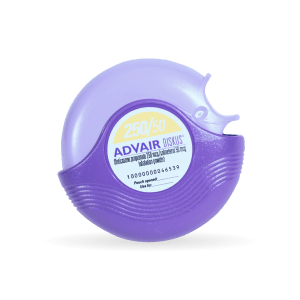
Advair Diskus

Advair Diskus is a trusted medication for managing asthma and COPD symptoms, offering effective relief and improved breathing. This convenient inhaler combines two active ingredients to help reduce inflammation and relax airways. Experience long-lasting control over your respiratory condition with regular use. We are pleased to offer Advair Diskus over the counter (OTC) for your convenience, making it readily accessible without a prescription. Choose Advair Diskus for reliable support in maintaining your respiratory health.
Extra 10% discount with coupon: EXTRA10
Each dosage option has its own packaging options.
Advair Diskus How It Helps Control Asthma and Chronic Obstructive Pulmonary Disease
Advair Diskus is a widely recognized and trusted prescription medication designed to help individuals in the USA and worldwide manage chronic respiratory conditions like asthma and chronic obstructive pulmonary disease (COPD). This innovative inhaled medication combines two powerful active ingredients, fluticasone propionate and salmeterol, working synergistically to provide long-term control over symptoms and improve lung function. By addressing both inflammation and airway constriction, Advair Diskus offers a comprehensive approach to maintaining respiratory health and enhancing the quality of life for those affected by these challenging conditions.
Understanding how Advair Diskus functions and what makes it an effective treatment option is crucial for individuals seeking to make informed decisions about their respiratory care. This detailed guide explores the mechanisms behind its efficacy, its approved uses, potential benefits, and important considerations. We aim to provide a thorough overview of this medication, empowering you with the knowledge to better manage your respiratory health needs.
Understanding How Advair Diskus Works
Advair Diskus combines two distinct types of medication, each playing a vital role in respiratory management:
- Fluticasone propionate: This is an inhaled corticosteroid (ICS). Corticosteroids are potent anti-inflammatory agents that work by reducing swelling and irritation in the airways. For individuals with asthma and COPD, chronic inflammation leads to narrowed airways, making breathing difficult. Fluticasone propionate helps to calm this inflammation, making the airways less sensitive and reducing the frequency and severity of asthma attacks or COPD exacerbations over time. It is a preventative medication, meaning its full benefits develop with consistent, long-term use rather than providing immediate relief for sudden breathing problems.
- Salmeterol: This is a long-acting beta2-agonist (LABA). LABAs work by relaxing the muscles around the airways in the lungs. When these muscles tighten, they constrict the airways, leading to shortness of breath, wheezing, and coughing. Salmeterol provides bronchodilation, meaning it opens up the airways, making it easier to breathe. As a long-acting agent, its effects can last for up to 12 hours, offering sustained relief from symptoms and helping to prevent future attacks. It is important to note that salmeterol, like other LABAs, should never be used as a rescue inhaler for sudden, acute breathing difficulties. Its role is for long-term maintenance.
The combination of fluticasone propionate and salmeterol in Advair Diskus offers a dual-action approach: the anti-inflammatory action of the corticosteroid treats the underlying inflammation, while the bronchodilating action of the LABA provides sustained opening of the airways. This synergistic effect is often more effective than using either medication alone, leading to better symptom control and improved lung function for many users.
Approved Uses for Advair Diskus
Advair Diskus is approved for specific indications:
Asthma: It is used for the long-term maintenance treatment of asthma in patients aged 4 years and older. This includes preventing asthma symptoms such as wheezing, shortness of breath, chest tightness, and coughing. It is particularly beneficial for patients whose asthma is not adequately controlled with an inhaled corticosteroid alone, or for those whose disease warrants a combination product. Advair Diskus is not intended for the relief of acute bronchospasm, and a separate fast-acting rescue inhaler should always be available for this purpose.
Chronic Obstructive Pulmonary Disease (COPD): Advair Diskus is approved for the maintenance treatment of airflow obstruction and reduction of exacerbations in patients with COPD, including chronic bronchitis and/or emphysema. COPD is a progressive lung disease that makes it hard to breathe. The combination of fluticasone propionate and salmeterol helps to reduce inflammation in the airways and relax the muscles, which can improve breathing and decrease the frequency of flare-ups, which are periods when COPD symptoms worsen significantly. Like its use in asthma, Advair Diskus is for long-term maintenance and not for acute relief of COPD symptoms.
Benefits of Using Advair Diskus
For individuals managing asthma and COPD, the consistent use of Advair Diskus can provide several significant benefits:
- Improved Symptom Control: Regular use helps to reduce the frequency and severity of asthma symptoms (wheezing, coughing, shortness of breath) and COPD exacerbations, leading to more stable respiratory health.
- Enhanced Lung Function: By reducing inflammation and opening airways, it can lead to measurable improvements in lung function, making daily activities easier.
- Reduced Need for Rescue Medication: Better control of underlying conditions often means less reliance on fast-acting rescue inhalers, indicating more stable disease management.
- Better Quality of Life: With fewer symptoms and improved breathing, individuals can experience greater participation in daily activities, better sleep, and an overall enhancement in their quality of life.
- Convenience of Combination Therapy: Having two essential medications in one inhaler simplifies treatment regimens, potentially leading to better adherence to medication schedules.
Important Considerations and Potential Side Effects
While Advair Diskus is highly effective for many, it’s important to be aware of potential considerations and side effects. Common side effects can include upper respiratory tract infection, pharyngitis, hoarseness/dysphonia, oral candidiasis (thrush), bronchitis, cough, headache, nausea and vomiting, and musculoskeletal pain. Rinsing the mouth with water after each dose and spitting it out can help reduce the risk of oral thrush.
More serious, though less common, considerations may include: a paradoxical bronchospasm (sudden worsening of breathing problems immediately after using the inhaler), pneumonia in COPD patients, increased risk of infections, cardiovascular effects (e.g., increased blood pressure, heart rate), changes in bone mineral density, glaucoma or cataracts, and changes in glucose levels. Individuals with pre-existing heart conditions, diabetes, glaucoma, or cataracts should exercise particular caution. It is also important to avoid abrupt discontinuation of corticosteroids, as this can lead to withdrawal symptoms.
Drug interactions are also possible with Advair Diskus. Certain medications, especially strong cytochrome P450 3A4 inhibitors (e.g., ketoconazole, ritonavir, atazanavir, indinavir, saquinavir, nelfinavir, clarithromycin, telithromycin), can increase the systemic exposure to the components of Advair Diskus, potentially leading to increased side effects. Beta-blockers can block the bronchodilating effect of salmeterol and may produce severe bronchospasm in patients with asthma or COPD. Caution should also be exercised when co-administering with other sympathomimetic agents, non-potassium-sparing diuretics, and tricyclic antidepressants or monoamine oxidase inhibitors.
Always store Advair Diskus at room temperature, away from moisture and direct heat. Keep the inhaler in a dry place. The device should be kept out of reach of children. Once opened, the Diskus device has a specific shelf life, typically one month, after which it should be discarded, even if it still contains medication.
Here’s a quick overview of key characteristics:
| Characteristic | Description |
|---|---|
| Active Ingredients | Fluticasone propionate (Inhaled Corticosteroid) and Salmeterol (Long-Acting Beta2-Agonist) |
| Drug Class | Combination Inhaled Corticosteroid / Long-Acting Beta2-Agonist (ICS/LABA) |
| Form | Dry Powder Inhaler (Diskus device) |
| Primary Uses | Long-term maintenance treatment of asthma (4+ years old); Maintenance treatment of airflow obstruction and reduction of exacerbations in COPD |
| Mechanism of Action | Fluticasone propionate reduces airway inflammation; Salmeterol relaxes airway muscles (bronchodilation) |
| Key Benefits | Improved symptom control, enhanced lung function, reduced need for rescue inhaler, better quality of life |
| Onset of Action | Bronchodilation occurs within minutes, but full anti-inflammatory effects develop over weeks |
| Duration of Action | Up to 12 hours (for bronchodilation) |
Comparison with Popular Alternatives
In the landscape of respiratory medications, several other combination inhalers exist that serve similar purposes to Advair Diskus. These alternatives, while sharing the goal of managing asthma and COPD, often differ in their specific active ingredients, delivery mechanisms, and sometimes their approved age ranges or primary focus. Understanding these differences can help clarify why one medication might be preferred over another based on individual patient needs and responses.
Common alternatives include medications such as Symbicort, Dulera, and Breo Ellipta. Each of these products combines an inhaled corticosteroid with a long-acting beta2-agonist, but they use different compounds within these classes, which can affect their pharmacokinetic profiles, potential side effects, and patient suitability. For instance, Symbicort uses budesonide as its ICS and formoterol as its LABA. Formoterol has a quicker onset of action compared to salmeterol, which can sometimes be a consideration. Dulera combines mometasone furoate (ICS) with formoterol (LABA), offering another option with potentially different patient experiences.
Breo Ellipta uses fluticasone furoate (a different fluticasone derivative) as its ICS and vilanterol as its LABA. A key distinction for Breo Ellipta is its once-daily dosing schedule, which can be a significant advantage for patient convenience and adherence compared to the twice-daily dosing often associated with Advair Diskus and some other combination inhalers. While Spiriva is another prominent medication for COPD, it is a long-acting muscarinic antagonist (LAMA) and not a combination ICS/LABA, so its mechanism and primary role in treatment differ substantially, often used in conjunction with or as an alternative to ICS/LABA in certain cases.
When considering these alternatives, factors such as the specific corticosteroid and LABA components, the frequency of dosing, the type of inhaler device (e.g., Diskus, Turbuhaler, Metered Dose Inhaler, Ellipta), and individual patient response to each medication become critical. Some patients may respond better to one ICS or LABA over another, or find one inhaler device easier to use correctly. The choice of medication is typically a personalized decision, taking into account the patient’s condition severity, past treatment history, lifestyle, and potential side effect profiles.
Here’s a comparison table highlighting some popular alternatives:
| Product | Active Ingredients | Drug Class | Primary Uses | Key Differences / Notes |
|---|---|---|---|---|
| Advair Diskus | Fluticasone propionate (ICS), Salmeterol (LABA) | ICS/LABA | Asthma (4+), COPD | Twice daily. Dry powder inhaler (Diskus device). Well-established efficacy. |
| Symbicort (Budesonide/Formoterol) | Budesonide (ICS), Formoterol (LABA) | ICS/LABA | Asthma (6+), COPD | Twice daily. Dry powder inhaler (Turbuhaler device). Formoterol has a quicker onset of action. |
| Dulera (Mometasone/Formoterol) | Mometasone furoate (ICS), Formoterol (LABA) | ICS/LABA | Asthma (12+) | Twice daily. Metered-dose inhaler. Approved only for asthma. |
| Breo Ellipta (Fluticasone furoate/Vilanterol) | Fluticasone furoate (ICS), Vilanterol (LABA) | ICS/LABA | Asthma (18+), COPD | Once daily. Dry powder inhaler (Ellipta device). Convenient once-daily dosing. |
Frequently Asked Questions About Advair Diskus
1. How quickly does Advair Diskus start working?
While the salmeterol component of Advair Diskus begins to relax the airways and improve breathing within minutes after inhalation, the full anti-inflammatory effects of fluticasone propionate develop over a longer period, typically taking several days to weeks of consistent use. Therefore, while you might feel some immediate relief in breathing, the full benefits of asthma and COPD control from Advair Diskus are achieved with regular, long-term administration as prescribed. It is a maintenance medication, not a fast-acting relief for sudden symptoms.
2. Is Advair Diskus a rescue inhaler?
No, Advair Diskus is not a rescue inhaler. It is a long-term maintenance medication used to prevent asthma symptoms and COPD exacerbations. It should not be used for sudden attacks of shortness of breath or wheezing. For immediate relief of acute symptoms, a separate fast-acting rescue inhaler (such as albuterol) should always be used and kept readily available.
3. What are the most common side effects of Advair Diskus?
The most common side effects associated with Advair Diskus include upper respiratory tract infections, throat irritation, hoarseness or changes in voice, oral candidiasis (thrush in the mouth or throat), headache, and cough. Rinsing your mouth with water and spitting it out after each dose can help reduce the risk of oral thrush. If you experience persistent or bothersome side effects, it’s important to discuss them.
4. Can children use Advair Diskus?
Yes, Advair Diskus is approved for the long-term maintenance treatment of asthma in patients aged 4 years and older. The specific dosage strength will depend on the child’s age, weight, and the severity of their asthma. The Diskus device may require proper technique, and children may need supervision to ensure correct administration.
5. How long should I use Advair Diskus?
Advair Diskus is intended for long-term, consistent use to manage chronic asthma and COPD. The duration of treatment is typically ongoing, as determined by your individual needs for controlling your respiratory condition. Do not stop using Advair Diskus abruptly, even if you feel better, as this can lead to a return or worsening of symptoms. Any adjustments to your treatment plan should be made under guidance.
6. What should I do if I miss a dose of Advair Diskus?
If you miss a dose of Advair Diskus, take it as soon as you remember. However, if it is almost time for your next scheduled dose, skip the missed dose and resume your regular dosing schedule. Do not take a double dose to make up for a missed one, as this could increase the risk of side effects.
7. What is the difference between Advair Diskus and a single-ingredient inhaler?
Advair Diskus is a combination inhaler containing two active ingredients: fluticasone propionate (an inhaled corticosteroid) and salmeterol (a long-acting beta2-agonist). A single-ingredient inhaler would contain only one type of medication, such as an inhaled corticosteroid alone (e.g., Flovent) or a long-acting beta2-agonist alone (e.g., Serevent). Advair Diskus offers the benefit of addressing both inflammation and airway constriction with one device, often providing more comprehensive control for patients whose conditions require both types of treatment.
8. Can Advair Diskus cause weight gain?
Systemic corticosteroids are known to potentially cause weight gain. While fluticasone propionate in Advair Diskus is an inhaled corticosteroid designed to act locally in the lungs, minimizing systemic absorption, some systemic effects can still occur, especially at higher doses or in sensitive individuals. Significant weight gain is not a commonly reported side effect for inhaled corticosteroids compared to oral corticosteroids, but any unusual changes in weight or other side effects should be discussed.
What Users Are Saying
“Living in the USA with severe asthma used to be a constant struggle, especially with seasonal changes. Since I started using Advair Diskus, I’ve noticed a dramatic improvement in my daily breathing. My wheezing is almost gone, and I can finally enjoy walks without feeling constantly out of breath. It’s truly been a game-changer for me, giving me back a sense of normalcy and confidence in my lung health.” – Emily R., 48
“Managing my COPD felt like an uphill battle, with frequent exacerbations making me anxious about everyday activities. After switching to Advair Diskus, the difference is remarkable. I’m experiencing fewer flare-ups, and my overall lung function feels more stable. It’s comforting to have a treatment that helps me breathe easier throughout the day, allowing me to engage more fully with my family and hobbies. This medication has significantly enhanced my quality of life.” – David L., 62
| Dosage | 100mcg+50mcg, 250mcg+50mcg, 500mcg+50mcg |
|---|---|
| Package | 1 accuhaler, 2 accuhaler, 2 inhaler, 3 accuhaler, 3 inhaler, 4 accuhaler, 5 accuhaler |
| Active Ingredient | fluticasone, salmeterol |
Be the first to review “Advair Diskus”
You must be logged in to post a review.
Related products


AntiAllergics
Reviews
There are no reviews yet.